
My backyard is still under over a foot of snow with more expected this week. My bird feeder has been a busy gathering place for my feathered friends. And the squirrels are just as happy to dine on whatever mess they find on the ground from those messy birds.
But yesterday, I saw them munching on a different treat - rose hips.

During the summer, my carpet roses are a beautiful shade of pink and emit a sweet scent. Rose hips are swollen seed pods that form under the blossom, turning orange and red, and last for months after the blossom is long gone. Here's how mine looked in October.
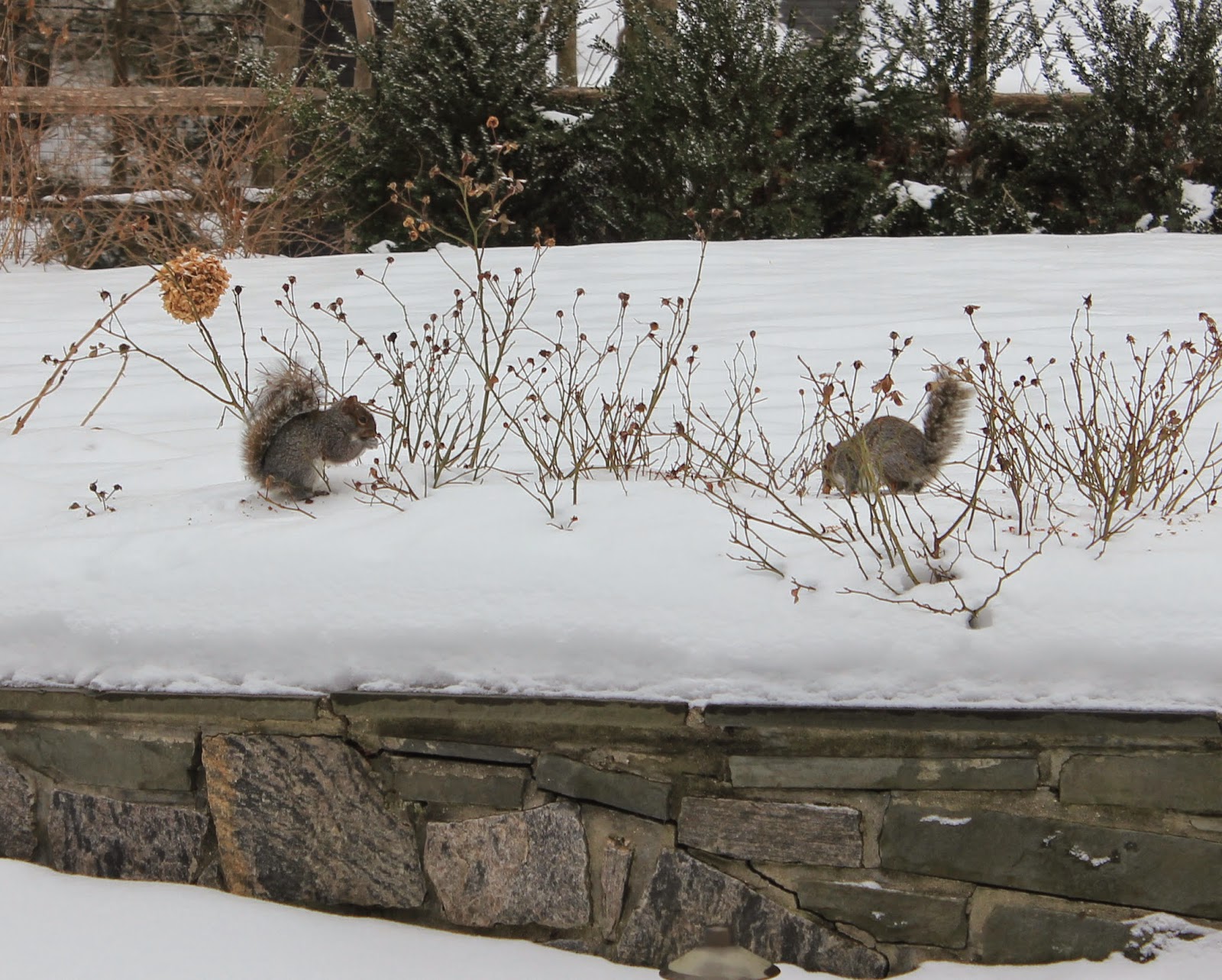
Rose hips are a tasty treat for squirrels, birds and rabbits. Humans can eat them too, but only the fleshy outer part. The hairy inner seeds can irritate human intestines. Personally, I've never eaten one, but I've read that they taste like a tart apple crossed with a rose petal. Rose hips are rich in vitamin C and can be made into jams, jellies, syrups and tea.

Looking at these two, enjoying the rose hips, I'm so happy I didn't deadhead the roses at the end of the season. I left them because they were attractive, but also a valuable food source for wildlife during a time of year when food is scarce.

Yum!
The squirrels certainly do look happy! A very pleasant wintry moment but I still can't wait for spring to finally get here.
ReplyDeleteI 'm right there with you Chris - so ready for spring!
DeleteWhat a sweet and insightful post! I've always admired rose hips for their beauty but hadn't thought much about their role as a winter food source for wildlife. It's fascinating to see how the squirrels interact with them. Thanks for sharing this lovely observation!
ReplyDeleteIt’s fascinating to see how rose hips serve as a vital lifeline for local wildlife like squirrels during the harsh winter months. Maintaining a garden that supports the local ecosystem is a key aspect of sustainable horticulture. To ensure that roses and other fruiting shrubs remain productive and resilient enough to provide these 'winter snacks,' the underlying soil health is paramount. In our professional practice, we’ve found that amending the soil with solucan gubresi (vermicompost) during the growing season strengthens the plant's immune system and boosts fruit production. This natural approach creates a thriving environment for both plants and the wildlife that depends on them. Thank you for highlighting this beautiful seasonal interaction!
ReplyDelete